

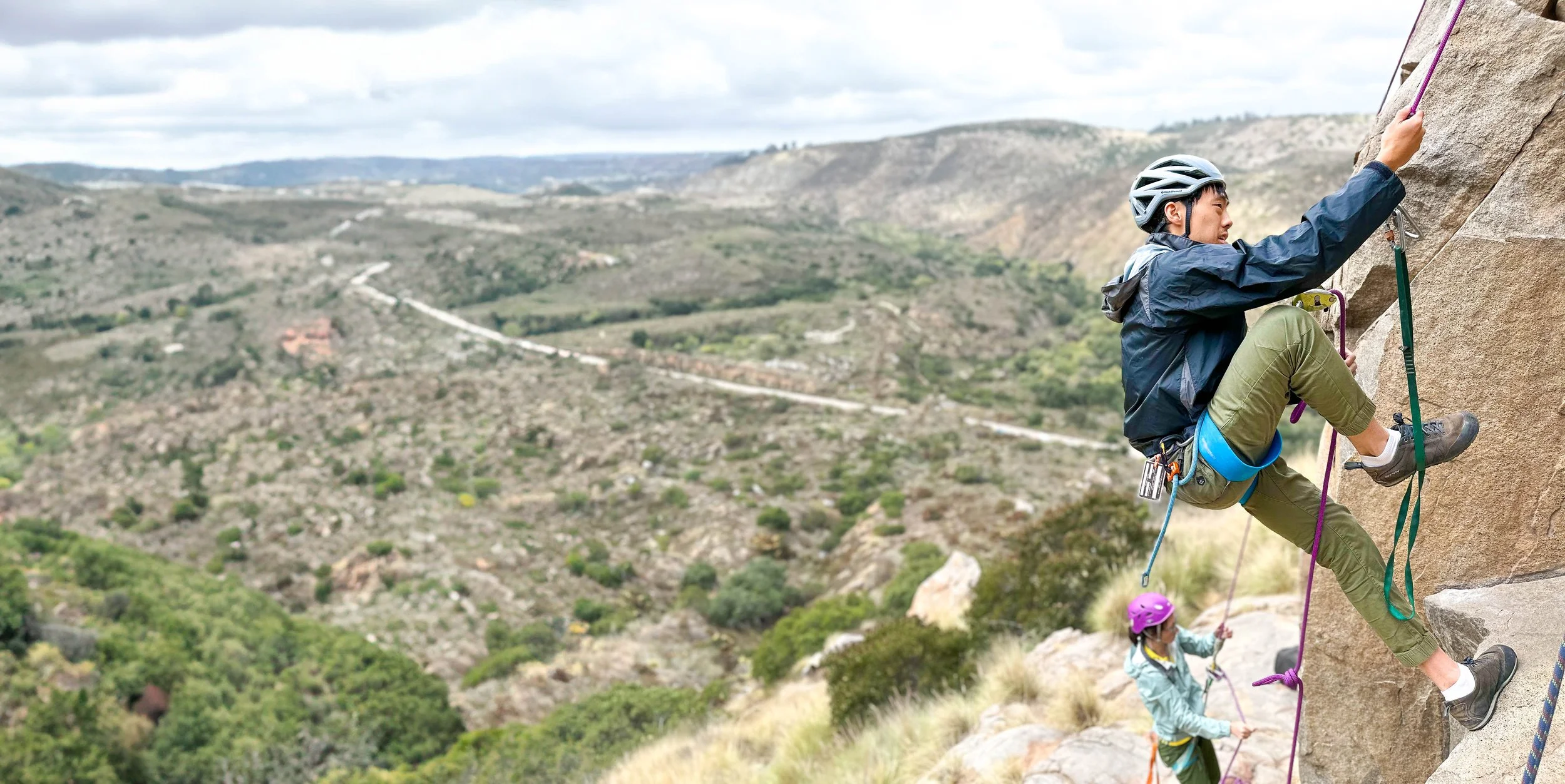
self rescue 101
LOCATIONS: Joshua Tree, Big Bear, San Diego
COURSE LENGTH: FULL DAY (8 HOURS)
*Private courses can also be held in the Greater Los Angeles area, Mammoth Lakes, Eastern Sierra & Alabama Hills - Message for custom pricing.
WHAT TO EXPECT
Build the foundational skills to respond when a climbing day doesn’t go as planned. Learn to use your existing rope systems in new ways through hands-on self-rescue practice.
For climbers ready to develop their rescue skills – practice ascending ropes, setting up 3:1 hauling systems, and assisting a partner. This course lays the groundwork for more advanced self-rescue training and helps you understand the possibilities and limits of these systems.
-
Self Rescue 101 introduces foundational rescue systems and the possibilities of using climbing equipment beyond everyday climbing. You’ll practice these systems hands-on and build a foundation for more advanced self-rescue courses.
EXPERIENCE & PREPARATION
Basic climbing, belaying, knot, and rope-management experience is helpful. Share your background with Golden State Guiding so your guide can confirm that this course is the right starting point.
COURSE SCOPE
No single course covers every emergency. This course develops foundational problem-solving skills; it does not replace sound judgment or professional emergency response. Sometimes waiting for help is the appropriate choice. -
ROPE ASCENDING
We’ll review and practice ascending a rope using friction hitches and an assisted-braking device such as a GriGri under guide supervision.
3:1 HAULING SYSTEMS
We’ll introduce the components and applications of a 3:1 hauling system and practice setting up the system in a controlled learning environment.
ASSISTED HAULING
We’ll review and practice assisted hauling techniques, exploring how familiar climbing equipment can be used to help a partner.
HANDS-ON SYSTEM PRACTICE
You’ll apply these foundational systems with instructor guidance, building the understanding needed for more advanced self-rescue training. -
Harness, helmet, climbing shoes (if needed).
All technical climbing equipment, including ropes, quickdraws, active and passive traditional climbing gear, slings, cords, and locking carabiners.
Professionally trained AMGA Guide.
-
This course is for climbers who want a practical introduction to fundamental self-rescue systems and new ways to use their existing climbing equipment when problems arise.
-
Basic climbing, belaying, knot, and rope-management experience is helpful. Contact Golden State Guiding with your background so the guide can confirm that Self Rescue 101 is the appropriate starting point.
-
The course focuses on foundational systems such as ascending a rope with hitches or an assisted-braking device, building 3:1 hauling systems, and practicing assisted hauling techniques.
-
No single course can cover every emergency. Self Rescue 101 builds foundational problem-solving skills and prepares climbers for more advanced rescue training, but it does not replace sound judgment or professional emergency response.
-
Yes. Participants practice constructing and operating rescue systems under guide supervision so they can understand each step, identify common errors, and develop familiarity with the equipment.
-
Required gear depends on the venue and course plan. Golden State Guiding will provide a complete list explaining personal climbing equipment, technical items used during instruction, and anything supplied or available to rent.